
Tedious tendon pain? Is shockwave the answer?
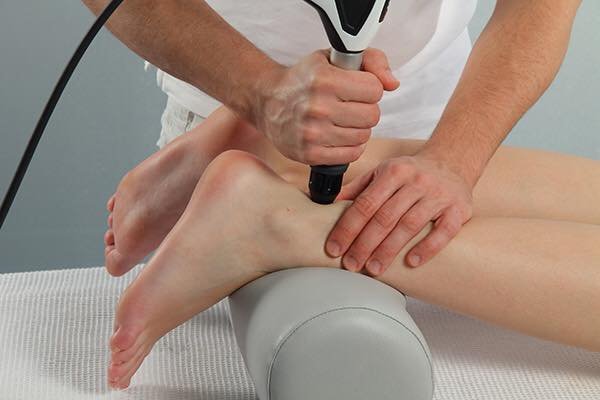
Tendon injuries can be frustrating. Whether it’s persistent Achilles pain, tennis elbow, patellar tendon pain or plantar heel pain, symptoms can linger for months and make the activities you enjoy difficult. Common remedies people often try include rest, ice, massage, stretching.
The key to any tendon rehab program is a progressive loading program, but progress is often slow and requires patience and discipline.
One treatment option that is increasingly used alongside exercise rehabilitation is shockwave therapy. But what exactly is it, and how can it help tendon injuries?
What is shockwave therapy?
Shockwave therapy uses high-energy acoustic waves to deliver mechanical energy into the affected area. Rather than simply trying to “break up scar tissue”, the aim is to stimulate biological processes that may help the tendon respond to rehabilitation.
Shockwave treatment is usually delivered in a series of sessions, with the treatment parameters adjusted depending on the injury, the tendon involved and the individual.
What are the potential benefits?
1. It can help reduce pain
One of the main reasons people seek shockwave therapy is persistent tendon pain.
Shockwave treatment may influence pain sensitivity and the way the nervous system processes pain. For some people, this can provide a useful reduction in symptoms, allowing them to tolerate rehabilitation exercises more comfortably.
2. It can support tendon rehabilitation
Tendons generally respond best to progressive loading and exercise. Shockwave therapy shouldn't be viewed as a replacement for rehabilitation.
Instead, it can potentially be used alongside a structured loading programme. If symptoms become more manageable, patients may be able to progressively increase their exercise and return towards their normal activities.
3. It may stimulate biological changes within the tendon
Research suggests that shockwave therapy can influence several biological processes involved in tissue adaptation and healing.
The exact mechanisms are still being investigated, but proposed effects include changes in local blood flow, cellular activity and tissue remodelling.
4. It can be useful for persistent tendon problems
Shockwave therapy is particularly commonly used for chronic or persistent tendon conditions that have not responded adequately to initial conservative treatment.
Examples include:
Achilles tendinopathy
Patellar tendinopathy
Tennis elbow
Gluteal tendinopathy
Rotator cuff-related tendon pain
Plantar heel pain
Importantly, the evidence varies between different conditions, so shockwave isn't appropriate for every tendon injury.
Is shockwave therapy painful?
It can be uncomfortable, particularly when treating a sensitive tendon. However, the intensity can usually be adjusted according to your symptoms.
Treatment normally only takes a few minutes, and many people tolerate it well.
You may experience some tenderness or aching afterwards, which generally settles relatively quickly.
How many treatments will I need?
This depends on the condition, how long you have had symptoms and how you respond to treatment.
A course may involve several treatment sessions- we usually suggest 3-6 combined with a progressive exercise programme. Your physiotherapist should assess your condition and determine whether shockwave is appropriate rather than simply treating the painful area.
Shockwave isn't a magic fix
This is perhaps the most important point.
Shockwave therapy shouldn't be considered a stand-alone cure for tendon injuries. The cornerstone of tendon rehabilitation is usually appropriate progressive loading.
Think of shockwave as one potential tool within a bigger rehabilitation plan.
Your physiotherapist may combine it with:
Strength training
Tendon-loading exercises
Mobility work where appropriate
Modification of aggravating activities
Running or sports-specific rehabilitation
Gradual return to your chosen activity
Advice around training load and recovery
The aim isn't simply to make your tendon feel better — it's to help you build the capacity to return to the activities you enjoy.
Could shockwave therapy be right for you?
If you've had persistent tendon pain that is limiting your running, walking, gym training or sport, shockwave therapy may be worth discussing with a physiotherapist.
A proper assessment is important because not all tendon pain is the same, and treatment should be based on the diagnosis, your symptoms, your goals and the demands you want to place on the tendon.
At Matt Williamson Physiotherapy, shockwave therapy can be used as part of an individualised rehabilitation programme designed around getting you back to the activities you enjoy. We use the latest technology from market leader Storz Medical. Shockwave Therapy Machines - Trusted by the NHS & Elite Sports Teams
If you are struggling with a persistent tendon injury get in touch to arrange an assessment and find out whether shockwave therapy could be appropriate for you.